
Quick summary
The National Stock Exchange (NSE) is India’s largest modern stock exchange. It introduced screen-based electronic trading and changed how Indians buy and sell shares. This guide explains how it works, why it matters, and practical tips for traders and investors. NSE India+1
What is the National Stock Exchange?
- The NSE is a securities exchange based in Mumbai that lists thousands of companies and runs India’s popular indices (e.g., Nifty 50).
- It was incorporated in 1992 and started operations in the mid-1990s as an electronic trading platform, making trading faster and more transparent. NSE India+1
Fast facts (load-bearing facts)
- Incorporated: 1992; recognized by SEBI in 1993; operations began in 1994. NSE India
- Headquarters: Exchange Plaza, Bandra Kurla Complex (BKC), Mumbai — official corporate address. NSE India
- Listings & market size: As of recent reports, NSE lists thousands of companies and its listed market-cap stands in multiple trillions USD (see official stats). Exact figures change each quarter — check NSE facts page for live numbers. Wikipedia+1
- Technological edge: First large-scale fully automated, screen-based trading in India — opened access countrywide. Investopedia
- Regulatory note: NSE has faced high-profile regulatory cases; in 2024 SEBI dismissed certain charges in the co-location matter, a major news development for the exchange. Reuters
How the National Stock Exchange works — simple steps
- Listing: Companies apply to list shares; once approved, their shares trade on NSE.
- Trading: Investors place buy/sell orders through brokers or trading apps connected to NSE’s system.
- Order matching: Electronic systems match bids and asks instantly (limit orders, market orders, etc.).
- Clearing & settlement: After trade execution, a clearing house ensures money and shares exchange smoothly.
- Indices & products: NSE runs indices (Nifty 50) and derivatives (options, futures), ETFs, bonds, and more.
Who uses NSE?
- Retail investors (via brokers and apps).
- Institutional investors (mutual funds, insurance, foreign funds).
- Companies raising capital through IPOs.
- Traders using equity, derivatives, ETFs, and debt products.
Table: NSE vs BSE (quick comparison)
| Feature | National Stock Exchange (NSE) | Bombay Stock Exchange (BSE) |
|---|---|---|
| Founded (modern form) | Incorporated 1992; operations 1994. NSE India | Much older (est. 1875) |
| Tech | Electronic, screen-based from start. Investopedia | Earlier manual; later electronic |
| Popular index | Nifty 50 | Sensex (BSE Sensex) |
| Location (HQ) | BKC, Mumbai. NSE India | Dalal Street, Mumbai |
| Typical users | High retail & derivatives activity | Strong historical equity trading |
Practical tips for freelance traders (short & actionable)
- Use limit orders to control entry price and avoid slippage in volatile stocks.
- Track Nifty 50 for market direction — many stocks move with the index. Investopedia
- Keep an eye on corporate news and SEBI updates — regulatory changes affect liquidity and listing rules. Reuters
- For intraday, verify broker execution speed and latency, since NSE is highly electronic and speed helps.
- Practice with a small capital and maintain a strict risk:reward ratio per trade.
Suggested images & infographic ideas (with full content so you can create them)
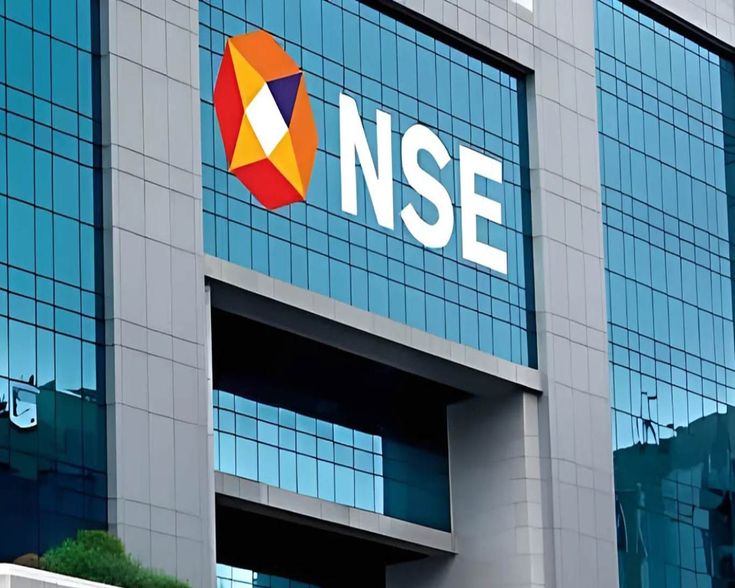
1) Hero image for the blog
- Description: Clean photo of NSE’s Exchange Plaza building (BKC) with a slight blur background and “National Stock Exchange — How it works” overlay.
- Alt text: “National Stock Exchange Exchange Plaza, Bandra Kurla Complex, Mumbai.”
- Why: Builds trust and matches search intent.
2) Infographic: “How a trade happens on the NSE” (vertical)
Sections & text (ready to drop into a designer):
- Title: How a trade happens on the National Stock Exchange (4 simple steps)
- Step 1: Investor sends order — via broker/trading app (market or limit).
- Step 2: Order reaches NSE order book — electronic matching engine processes orders.
- Step 3: Match & execute — trade executed when buy and sell prices meet.
- Step 4: Clearing & settlement — clearing house ensures shares and funds settle (T+1/T+2 as per rule).
- Footer: Small note: “NSE introduced screen-based trading in 1994, making market access nationwide.” NSE India+1
3) Data block image: “NSE Snapshot”
- Content: (use latest values from NSE facts page) — number of listed companies, market cap (₹ or $), top indices (Nifty 50 value), registered investors count. Add source line: “Source: NSE (date).” NSE India+1
(If you want, I can generate infographic copy in a PNG-ready layout—tell me sizes and I’ll output content blocks.)
Short glossary (easy terms)
- Nifty 50: Top 50 companies index on NSE. Investopedia
- Order book: Live list of buy and sell orders.
- Derivatives: Contracts like futures/options traded on NSE.
- Clearing: The process that finalizes trades.
Sources & further reading (important — check for live updates)
- NSE — History & Milestones (official): NSE’s corporate history and milestones. NSE India
- NSE — Contact & corporate address: Official HQ and contact details. NSE India
- Wikipedia — National Stock Exchange of India (current overview & stats). Wikipedia
- Investopedia — What is National Stock Exchange of India (technology & role). Investopedia
- Reuters — Major regulatory update (SEBI dismissal in co-location case). Reuters
Tip: For numbers (market cap, listed companies), link to the live NSE facts page in your blog so readers and search engines see current data. NSE India+1
Frequently Asked Questions (FAQs)
Q1: When was the National Stock Exchange started?
A: Incorporated in 1992; recognized by SEBI in 1993 and started electronic operations in 1994. NSE India
Q2: Where is the NSE located?
A: Exchange Plaza, Bandra Kurla Complex (BKC), Mumbai. NSE India
Q3: What index does NSE run?
A: The most popular is the Nifty 50, which tracks 50 leading companies across sectors. Investopedia
Q4: How can a small trader start on NSE?
A: Open a DEMAT + trading account with a registered broker, fund the account, learn order types, and start with small positions.
Q5: Is NSE regulated?
A: Yes — by SEBI (Securities and Exchange Board of India). NSE must follow SEBI rules and periodically faces regulatory reviews. Recent major regulatory news has influenced its public listing plans. Reuters
Quick checklist: blog on-page SEO (use before publish)
- Title includes primary keyword: National Stock Exchange — Complete guide.
- First paragraph uses keyword within first 50 words.
- Use H2s with related phrases: “How the National Stock Exchange works”, “NSE vs BSE”, “Nifty 50”.
- Add internal links to other site pages (e.g., “trading strategies”, “broker reviews”).
- Add structured data for FAQ to help SERP features (copy the FAQ Q/As).
- Add 1–2 images with descriptive alt text (see suggestions above).
- Add citations/links to official NSE pages — improves trust and E-A-T.
Closing — why this matters
The National Stock Exchange made modern trading accessible in India. Whether you’re a freelance trader or a long-term investor, understanding NSE’s structure, tools, and rules helps you trade smarter and manage risk better. Keep learning and check primary sources for live numbers before big decisions. NSE India+1
About the author
Tanishq Mittal — Digital marketer and freelance trader who writes practical guides for new traders. Specializes in clear explainers that blend trading basics with SEO-friendly content.