
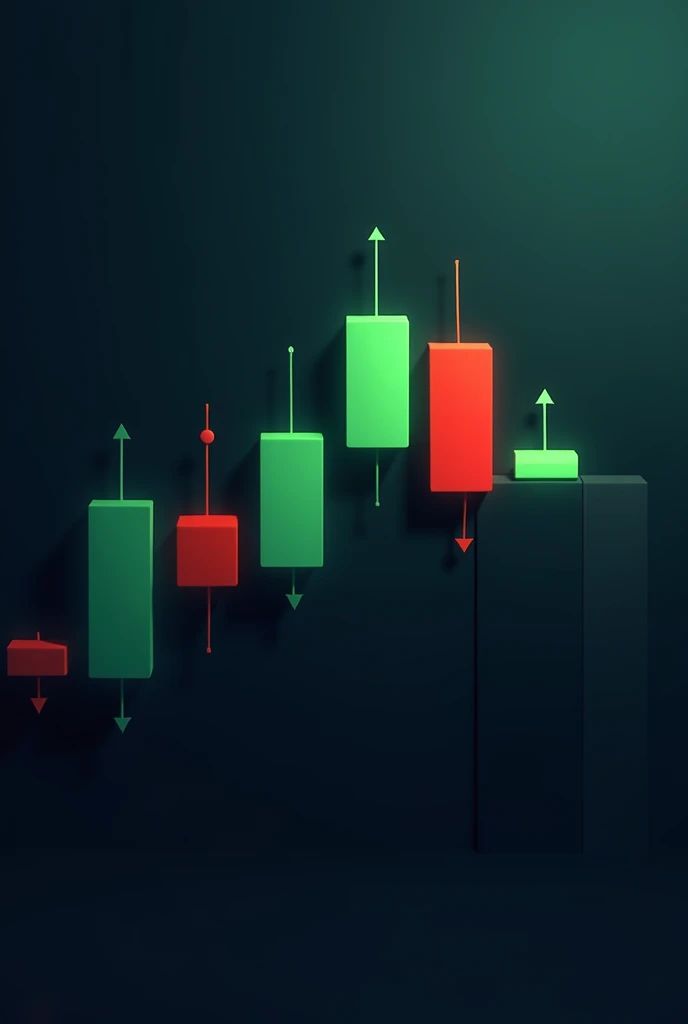
What Are Candlesticks?
Candlesticks are chart tools used in trading to show price movement during a specific time.
Every candlestick shows Open, High, Low, and Close (OHLC) prices.
Candlestick analysis has existed for 300+ years, originally developed by Japanese rice traders like Munehisa Homma, one of the earliest market analysts. (Source: “The Candlestick Trading Bible” & Investopedia)
Why Candlesticks Are Important
- Clearly show market psychology
- Help identify trend direction
- Perfect for intraday, swing, and long-term analysis
- Show buying/selling pressure within seconds
- Used in stocks, crypto, forex, commodities, indices
Structure of a Candlestick
A candlestick has two main parts:
1. Body
Shows the difference between open and close price.
2. Wick (Shadow)
Shows the highest and lowest price of the session.
Colors
- Green/White Candle: Price closed higher → Bullish
- Red/Black Candle: Price closed lower → Bearish
Table: Candle Components Explained
| Part | Meaning |
|---|---|
| Open | Price at start of the session |
| Close | Price at end of the session |
| High | Maximum price reached |
| Low | Minimum price reached |
| Body | Strength of move |
| Wick | Market rejection |
Types of Candlesticks
Every candlestick tells a story about buyers and sellers.
1. Bullish Candlesticks
Indicate strong buying.
- Bullish Marubozu
- Hammer
- Morning Star
- Bullish Engulfing
2. Bearish Candlesticks
Indicate strong selling.
- Bearish Marubozu
- Shooting Star
- Evening Star
- Bearish Engulfing
3. Neutral Candlesticks
Market indecision.
- Doji
- Spinning Top
- Inside Bar
Most Powerful Candlestick Patterns (2025)
✔ 1. Hammer
- Appears after downtrend
- Shows strong buying from lower levels
- Signals reversal
✔ 2. Shooting Star
- Appears after uptrend
- Shows selling pressure
- Signals reversal
✔ 3. Engulfing Pattern
- Big candle covers previous candle
- Strong reversal signal
- Works in all markets
✔ 4. Doji
- Open = Close
- Market confusion
- Strong movement after Doji is common
✔ 5. Morning Star & Evening Star
- 3-candle pattern
- Clear bullish/bearish reversal
Bullish vs Bearish Candles: Quick Comparison
| Feature | Bullish Candle | Bearish Candle |
|---|---|---|
| Color | Green/White | Red/Black |
| Close Price | Higher than open | Lower than open |
| Market Sentiment | Buying | Selling |
| Signal | Uptrend or reversal up | Downtrend or reversal down |
How to Read Candlesticks (Beginner Method)
✔ 1. Look at the body first
Big body = strong move
Small body = weak move
✔ 2. Check the wicks
Long wick = rejection
Short wick = stable movement
✔ 3. Compare with previous candles
- Strong continuation
- Trend weakening
- Reversal signs
✔ 4. Read in context
One candle alone is not enough—check trend and support/resistance.
Best Timeframes to Read Candlesticks
- 1 min / 3 min → Scalping
- 5 min / 15 min → Intraday
- 1 hour / 4 hour → Swing trading
- 1 day → Long-term trend
Facts About Candlesticks (With Sources)
- Candlestick charts originated in 18th-century Japan. (Investopedia)
- Over 70+ candlestick patterns exist, but only 8–10 are widely reliable. (CMT Association)
- Professional analysts combine candlesticks with indicators for confirmation. (CFA Institute)
Infographic Ideas to Add to the Blog
Infographic 1: “Anatomy of a Candle”
- Body
- Upper wick
- Lower wick
- Bullish vs bearish colors
Infographic 2: “Top 5 Candlestick Patterns”
Hammer, Doji, Engulfing, Morning Star, Shooting Star.
Infographic 3: “Bullish vs Bearish Candle Comparison”
Side-by-side icons with clear labels.
Infographic 4: “How to Read Candlestick Charts”
Step-by-step visual guide.
Common Mistakes Beginners Make
- Relying only on candles without trend
- Trading every pattern blindly
- Ignoring volume
- No stop-loss
- Misreading Doji signals
FAQs
1. Are candlestick patterns accurate?
They are useful but work best with volume and trend confirmation.
2. Can beginners learn candlesticks easily?
Yes—most patterns are simple and become clear with practice.
3. Which is the most reliable pattern?
Engulfing, Hammer, and Doji are considered highly reliable.
4. Are candlesticks used in all markets?
Yes—stocks, crypto, forex, commodities, indices.
5. How many patterns should I learn first?
Start with 8 basic patterns: Hammer, Doji, Engulfing, Morning Star, Evening Star, Shooting Star, Marubozu, Inside Bar.
About the Author
Tanishq Mittal is a digital marketer and trading educator who creates simple, high-quality content on finance and markets. He explains complex topics in easy words to help beginners learn trading confidently. Follow him on LinkedIn for daily insights.